
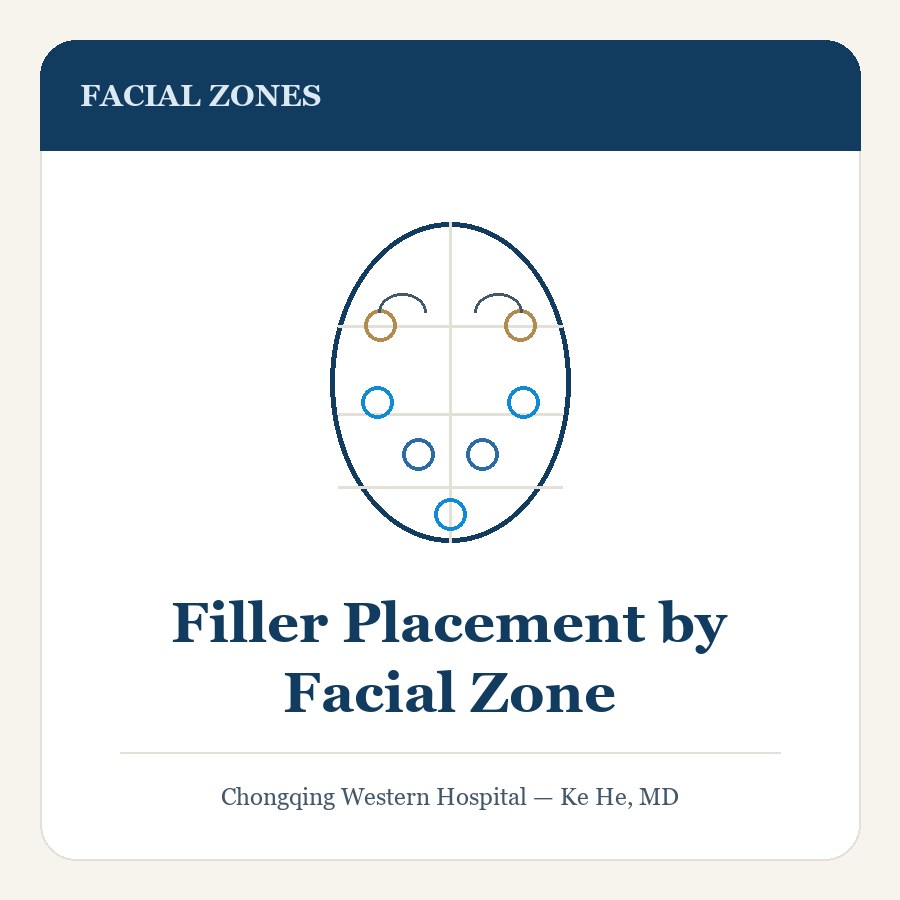
In short. Why the layer matters more than the volume: how filler is planned in the midface, nasolabial fold, lips, chin and temple, and where the vascular risk is highest.
Key points
- A face is not a balloon to be inflated evenly.
- Support is restored in the plane where it was lost, and the surface is left alone unless the surface is the actual problem.
- When a plan is described only in millilitres of product and not in depth, the important part has not been explained.
The same filler molecule produces a very different result depending on where it is placed and how deep it sits. Two treatments using the same material can look natural in one pair of hands and heavy in another, and the variable is rarely the product.
Why depth decides the result
Filler placed on bone behaves differently from filler in the deep fat compartments, and both differ from filler placed superficially in the skin or lips. Deep placement restores structural support and lifts the tissue above it. Superficial placement changes the surface. Choosing the wrong layer is why a result can look inflated rather than refreshed.
Midface: restoring support rather than inflating
In the cheek the aim is to restore support that has descended or deflated, not to bulk out a cheek that was never flat. That means deep placement on bone or in the deep fat compartments, so the material lifts the tissue above it. Superficial filling produces a rounded midface that reads as treated rather than rested.
The nasolabial fold is usually a symptom
The fold running from the nose to the mouth corner is often a consequence of midface descent rather than a problem in itself. Filling directly into the fold can look heavy and appear more pronounced when the face moves. The honest approach supports the midface and treats the fold only as a refinement.
Lips: proportion and hydration, not size
Lips are thin-tissued and highly mobile, and over-filling is most obvious here. The goal is usually proportion, balance between the upper and lower lip, a defined but unforced border, and better hydration of dry tissue, rather than maximum volume. Movement exaggerates anything placed badly here.
Chin and temple: structure and depth
The chin is treated for projection, not volume: material placed on bone to bring it forward and improve the profile. The temple is a hollow that deepens with age, treated deeply in a plane close to bone. That depth is not a stylistic preference: the temple contains vessels, and the plane chosen is part of managing that risk.
Layer first, volume second
A face is not a balloon to be inflated evenly. Support is restored in the plane where it was lost, and the surface is left alone unless the surface is the actual problem. When a plan is described only in millilitres of product and not in depth, the important part has not been explained.
The vascular map is the real safety device
The face is a network of arteries, and filler placed inside a vessel can block flow to skin and, rarely, to the eye. The temple, the glabella, the nose, and the nasolabial region carry the greatest risk. No product removes that risk. What reduces it is a physician who knows the anatomy and recognises the warning signs immediately.
Warning signs after filler that need urgent assessment
- Skin in the treated area turning pale, white, mottled, or dusky — this needs immediate review.
- Severe pain that is disproportionate or increasing, or that does not settle within the first hours.
- Any change in vision, or blistering and skin breakdown in the treated area — seek urgent medical attention.
Frequently asked questions
Why can the same filler look natural in one face and heavy in another?
Because depth decides the result. Placed on bone or in the deep fat compartments it restores support and lifts the tissue above it. Placed superficially it changes only the surface, which is how a face comes to look inflated rather than rested.
Why is filling directly into the nasolabial fold usually the wrong approach?
The fold is often a symptom of midface descent rather than a problem in itself. Filling directly into it can look heavy and appear more pronounced when the face moves, so the honest approach supports the midface and treats the fold only as a refinement.
Which facial areas carry the highest vascular risk?
The temple, the glabella, the nose and the nasolabial region. Filler placed inside a vessel there can block flow to skin and, rarely, to the eye. No product removes that risk; anatomical knowledge and immediate recognition of the warning signs reduce it.
Risks & Limitations
- Vascular occlusion — a time-critical emergency in which filler blocks a blood vessel. It can cause skin loss and, rarely, blindness.
- Nodules, lumps or granuloma formation, which may need treatment or dissolution.
- Infection at the injection site.
- Asymmetry or over-correction; over-treatment is harder to correct than under-treatment.
- Migration of filler away from the intended area.
- Temporary brow or eyelid droop after botulinum toxin, which resolves as the effect wears off.
- Bruising and swelling. All injectable results are temporary and maintenance is required.
When to Seek Care
- Severe pain out of proportion to the procedure, or skin turning white, grey, mottled or dusky — this is a vascular emergency; seek care immediately.
- Any change in vision — seek emergency care immediately.
- Fever, spreading redness, warmth or pus at an injection site.
- A hard, painful lump that is growing.
- Drooping eyelid, difficulty swallowing, or difficulty breathing after botulinum toxin.
References & Further Reading
- American Academy of Dermatology (AAD) — injectable safety information
- American Society of Plastic Surgeons (ASPS) — injectable guidance
- U.S. Food and Drug Administration (FDA) — approved filler and neurotoxin products
- National Medical Products Administration (NMPA, China) — approved product status
This page is patient education, not medical advice, and it does not cite individual studies. Discuss your own case with a qualified clinician. To arrange an assessment at Chongqing West District Hospital, see Contact & Consultation.